
* All product/brand names, logos, and trademarks are property of their respective owners.
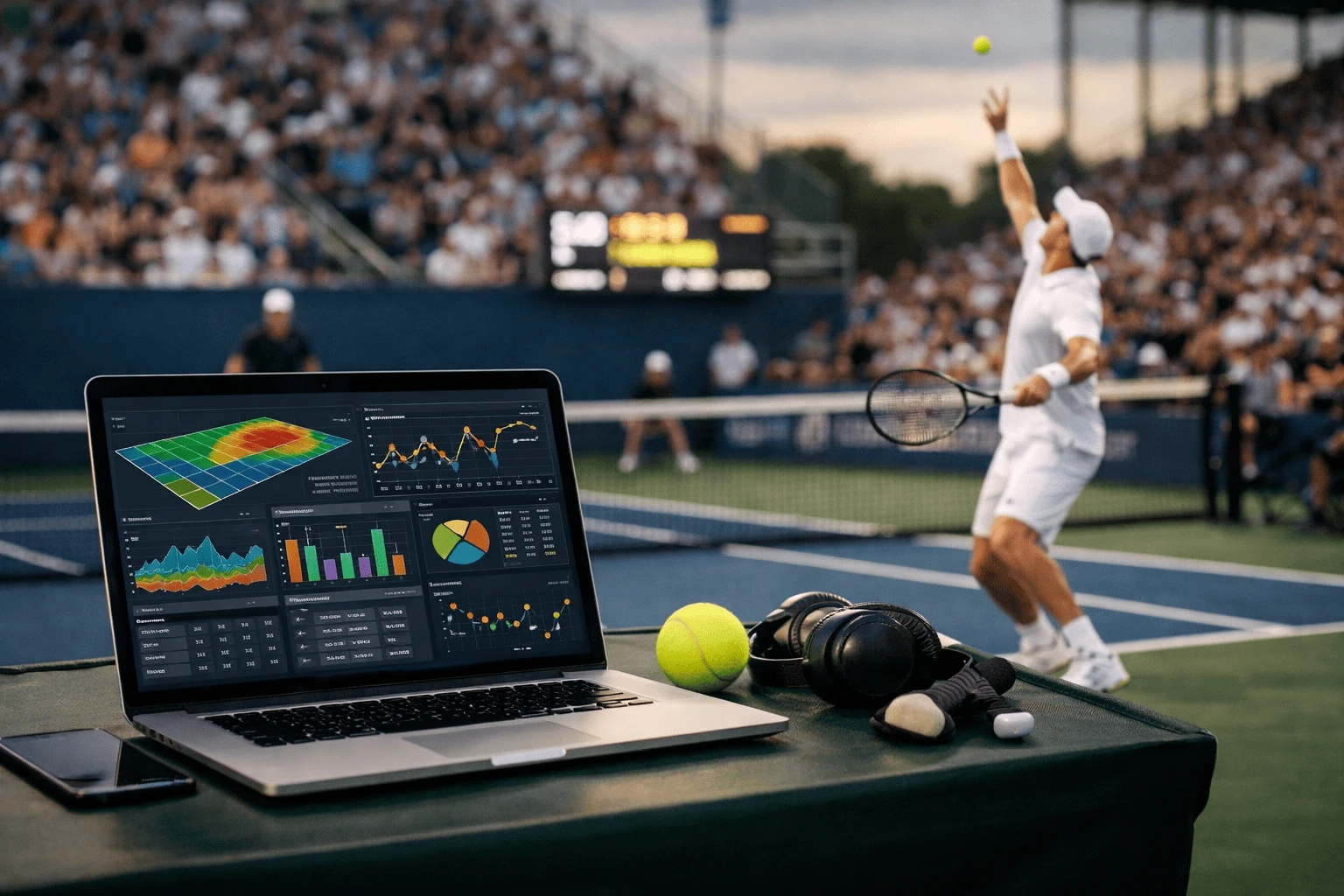
For years, pro tennis felt simple: serve bigger, win easier. A 230 km/h missile down the T could hush a stadium, wipe away break points, and flip momentum in seconds. Speed was loud, obvious, and scary. It became the headline stat everyone obsessed over. But tennis today isn’t the same game it was twenty years ago. Matches are now shaped by patterns, preparation, and precision. Teams study heatmaps, rally lengths, serve locations, return habits, and even fatigue. The focus has shifted from “How fast?” to “How smart?” Power still matters—but in modern tennis, strategy and data often decide who walks away winning.
There was a time when serve speed dominated headlines. Pete Sampras built a legacy around a lethal first serve and precise follow-up volleys. Andy Roddick’s explosive delivery was one of the most feared shots on tour. Later, giants like John Isner and Ivo Karlović turned service games into near-certainties, often forcing entire matches into tiebreaks.

In those eras, the strategy was straightforward:
Hold serve comfortably.
Apply scoreboard pressure.
Take risks in return games.
Let the opponent crack first.
On faster surfaces like grass, this formula was devastating. A massive serve would skid through the court, leaving returners with minimal reaction time. Aces piled up. Points stayed short. The server controlled the tempo. Serve speed became the symbol of dominance. Broadcast graphics highlighted it constantly. Fans compared numbers. Players are trained specifically to add a few extra kilometers per hour. It worked — for a long time.
Even in 2026, serve speed remains a major asset. A fast serve reduces reaction time, limits aggressive returns, and often produces short balls. Under pressure, a powerful first serve can be a psychological safety net. However, modern analysis shows that speed alone is not the full story. First-serve percentage matters just as much. A 230 km/h serve is useless if it misses half the time.
Elite players now aim for a blend of:
Controlled pace
Strategic placement
High first-serve consistency
Surface also plays a critical role. On grass, speed remains highly influential. On faster hard courts, big servers still gain a noticeable edge. But on clay and slower hard courts, power alone is less decisive. Longer rallies neutralize speed, and returners have more time to adapt. Serve speed still wins matches — but it no longer guarantees control.
The modern return game has evolved dramatically. Players like Novak Djokovic redefined what elite returning looks like. Improved movement, better anticipation, and enhanced video analysis have reduced the surprise factor of pure speed. There’s also a physical ceiling. Constantly serving at maximum velocity increases strain on shoulders, elbows, and lower backs. Injury prevention has become a major concern, especially in a sport with a demanding global calendar. Most importantly, data has exposed predictability. If a player serves wide on 70% of break points, opponents will know. Patterns are now tracked in detail. Raw power without variation becomes readable. And readable players become beatable.

The biggest shift in modern tennis is not that players hit slower. It’s that they hit smarter. Research indicates that while serve speed is important, serve placement and consistency under pressure are stronger predictors of match outcomes. For example, varying serve placement by more than 30% correlates with roughly a 20% higher chance of holding serve. That statistic alone highlights the growing importance of unpredictability. The serve-plus-one metric has also become central. Instead of focusing only on aces, coaches evaluate the success of the first shot after the serve. Winning short rallies (0–4 shots) through targeted placement often proves more effective than chasing outright winners.
A 210 km/h serve placed perfectly can be more dangerous than a 230 km/h serve hit predictably. Heatmaps now guide practice sessions. Players train not just to hit harder, but to hit to the right location at the right moment. The game has moved from pure velocity to calculated precision.
With the introduction of advanced tools like ATP Tennis IQ in 2025, preparation entered a new phase. Coaches can now analyze:
Opponent tendencies on key points
Preferred rally directions
Error rates beyond specific rally lengths
Surface-specific strengths and weaknesses
Artificial intelligence models identify patterns before matches begin. Players step on the court with detailed scouting reports outlining opponent preferences and vulnerabilities. Real-time adaptation has become a defining skill. Analytics allow teams to anticipate where a high-speed serve is most likely to land based on past data. Instead of reacting blindly, returners position themselves with informed expectations. Tennis is no longer just reactive. It is predictive.
Analytics extend beyond tactics. Wearable technology now tracks biomechanics, fatigue levels, and workload management. This data helps players adjust training intensity and recovery cycles. Older champions have benefited enormously from smarter scheduling and targeted preparation. Instead of relying purely on physical dominance, they optimize efficiency.
The phrase “play smarter, not harder” has become a reality. Data-driven training improves movement patterns, reduces injury risk, and enhances consistency under pressure. Analytics is not only influencing match strategy. It is shaping career longevity.
Despite its advantages, data has limitations. Too much information can overwhelm players. Over-analysis may create rigid thinking and reduce spontaneity. Tennis remains a dynamic sport where creativity, instinct, and courage decide crucial moments.
Some of the greatest points in history happened because players broke expected patterns. If everyone follows data blindly, unpredictability disappears. Top coaches emphasize balance. Data should inform decisions, not control them completely. The human element still matters.
The evidence suggests that analytics is not replacing serve speed. It is redefining how serve speed is used. Speed is no longer an isolated weapon. It is part of a broader strategic system. Analytics helps players decide:
When to go for maximum pace.
When to prioritize placement.
How to structure the serve-plus-one combination.
How to vary patterns under pressure.

A fast serve becomes far more effective when paired with intelligent positioning and pattern awareness. In 2026, dominance is not about how many aces you hit. It is about how effectively you control the first two shots of the rally.
Analytics has also revealed that different surfaces reward different traits. On grass, speed still dominates more frequently. On clay, spin rate and positioning heatmaps are often more influential. Slower hard courts reward consistency and rally tolerance. This nuanced understanding has shifted training philosophies. Players no longer rely on a single identity. They adapt their strategy based on surface data.
Looking ahead, the next generation will grow up with analytics integrated into development. Junior academies already incorporate data feedback into daily training. Tactical education begins earlier than ever. The competitive edge may increasingly belong to those with access to advanced tools. However, even in a data-driven future, instinct will remain critical. Tennis may become more analytical, but it will never become robotic.
So, will data analytics become more important than serve speed in tennis? In 2026, analytics have clearly become the strategic backbone of the sport. Serve speed remains a powerful weapon, but it is no longer the single defining factor of dominance. Modern tennis rewards integration — power supported by precision, intelligence supported by instinct. Analytics has transformed preparation, training, adaptation, and longevity. It has shifted tennis from a simple speed contest to a complex pattern-recognition battle. Yet the sport’s essence remains human.
The future belongs to players who can combine explosive serves with tactical awareness, who can follow the data and still break the pattern when the moment demands bravery. Serve speed still matters. But smart tennis matters more. And that balance is shaping the next era of the game
Related Article
Top 10 Tennis Players to Watch in 2026: Rising Stars & Legends

Mushraf Baig is a content writer and digital publishing specialist focused on data-driven topics, monetization strategies, and emerging technology trends. With experience creating in-depth, research-backed articles, He helps readers understand complex subjects such as analytics, advertising platforms, and digital growth strategies in clear, practical terms.
When not writing, He explores content optimization techniques, publishing workflows, and ways to improve reader experience through structured, high-quality content.
Pakistan has never lacked talent in sports. From cricket legends to squash champions, our athletes h
20 January 2026
The 2026 tennis season is already buzzing with excitement — and for good reason. From seasoned
7 January 2026
When Aryna Sabalenka steps onto a tennis court, her intent is unmistakable: dominate early, strike d
15 December 2025
Be the first to share your thoughts
No comments yet. Be the first to comment!
Share your thoughts and join the discussion below.
.webp&w=3840&q=75)
.webp&w=3840&q=75)
.webp&w=3840&q=75)