* All product/brand names, logos, and trademarks are property of their respective owners.
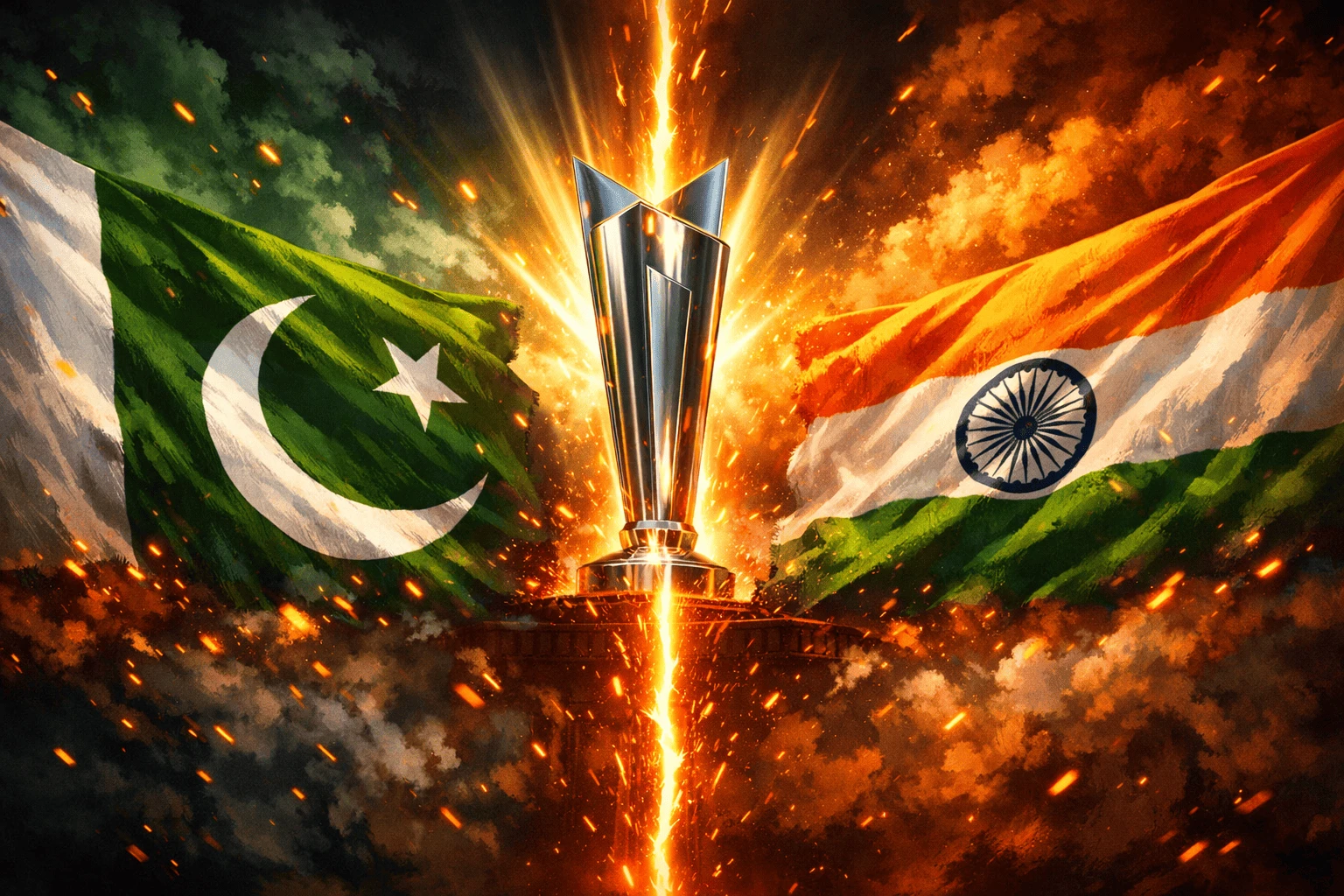
Pakistan has announced it will not play its Group A match against India at the 2026 ICC T20 World Cup. The decision was confirmed in an official statement by the Government of Pakistan on X (formerly Twitter), noting that while the team has permission to participate in the tournament in Sri Lanka, it will not take the field on 15 February 2026 against India. No reason was provided for the move, and the Pakistan Cricket Board (PCB) has yet to formally notify the International Cricket Council (ICC).
The X post from the Government of the Islamic Republic of Pakistan stated:
"The Government of the Islamic Republic of Pakistan grants approval to the Pakistan Cricket Team to participate in the ICC World T20 2026; however, the Pakistan Cricket Team shall not take the field in the match scheduled on 15th February 2026 against India."
The statement left many questions unanswered, including whether the decision applies to potential knockout-stage encounters between the two teams. The group-stage boycott makes the 2026 T20 World Cup the first men’s ICC event since 2010 where an India-Pakistan fixture is expected to be absent from the group stage.
Pakistan’s participation in the 2026 T20 World Cup had been uncertain following the controversy over Bangladesh’s removal from the tournament on 24 January. Bangladesh had refused to play in India, citing security concerns. Pakistan had publicly supported Bangladesh’s request for an alternate venue and criticized the ICC for what it called preferential treatment toward India.
PCB chairman Mohsin Naqvi stated that the government would make the final decision regarding Pakistan’s involvement. On 26 January, Naqvi met Prime Minister Shehbaz Sharif and said all options remained open, with a decision expected within days. Reports and speculation suggested Pakistan would travel to Sri Lanka but avoid the match against India, a theory reinforced after the PCB announced a World Cup squad and briefly released a statement confirming participation.
Pakistan is drawn in Group A alongside India, Namibia, the Netherlands, and the United States. The team’s first match will be against the Netherlands on 7 February, followed by a game against the USA on 10 February and Namibia on 18 February. If Pakistan forfeits the match against India, the team will lose the two points allocated for a group-stage victory.
According to ICC Playing Conditions, the forfeiture will also affect Pakistan’s net run rate. Clause 16.10.7 specifies that for a defaulted match,
“The full 20 overs of the defaulting team's innings in such forfeited match shall be taken into account in calculating the average runs per over of the defaulting team over the course of the relevant portion of the competition.”
India’s net run rate, however, will remain unaffected.
The India-Pakistan match is traditionally the most-watched and commercially significant game in any ICC event. Since 2012, ICC scheduling has ensured both teams are placed in the same group to maximize viewership, despite worsening diplomatic relations that have prevented bilateral series for 14 years.
The boycott adds uncertainty to the tournament’s commercial and sporting dynamics. Cricket fans and broadcasters are awaiting clarification on whether a potential India-Pakistan clash in the knockout stages will proceed. The PCB has yet to explain the group-stage withdrawal, and inquiries from media outlets, including ESPNcricinfo, remain unanswered.
Latest Update: Pakistan’s full statement and official communication to the ICC are pending. Any changes to tournament standings, playoff scenarios, or fixture rescheduling will be updated once the PCB informs the governing body.

Mushraf Baig is a content writer and digital publishing specialist focused on data-driven topics, monetization strategies, and emerging technology trends. With experience creating in-depth, research-backed articles, He helps readers understand complex subjects such as analytics, advertising platforms, and digital growth strategies in clear, practical terms.
When not writing, He explores content optimization techniques, publishing workflows, and ways to improve reader experience through structured, high-quality content.
Pakistan cricket discussions often move from one format to another without enough separation. A play
4 June 2026
The Gujarat Titans vs Royal Challengers Bengaluru IPL Final Match Review is all about pressure, cont
1 June 2026
Pakistan’s performance in the 2026 T20 World Cup was a mix of promise, pressure, and familiar
25 May 2026
Be the first to share your thoughts
No comments yet. Be the first to comment!
Share your thoughts and join the discussion below.