.webp)
* All product/brand names, logos, and trademarks are property of their respective owners.
The European football transfer window is where dreams, strategy, and fierce competition collide. It's not just a pre-season shuffle—it's a global spectacle that defines careers, reshapes clubs, and often rewrites football history. Every football season tells a story, but the real drama often begins long before a ball is kicked. Welcome to the transfer window — that electric period when speculation becomes strategy, rumors become record deals, and the balance of power in European football can shift overnight. For top European clubs, the 2025 summer transfer window isn’t just about filling positions — it’s about making statements. These clubs aren’t just chasing talent; they’re pursuing game-changing signings that can:
Ignite a fanbase
Tilt a title race
Boost their global reach
In today's global football economy, transfers are deeply strategic. The stakes are massive, with clubs investing in players who can impact both on the pitch and off it. From Real Madrid's star-studded ambitions to Bayern Munich's calculated rebuild, the race is on.
In this blog, we explore which clubs are making the boldest moves, why these signings matter far beyond the pitch, and how transfer strategies are shaping the future of football.
Few transfers have dominated headlines like Kylian Mbappé’s long-anticipated mov
e to Real Madrid in June 2024. After years of speculation, the French superstar finally joined Los Blancos on a free transfer, ending his spell at PSG.
Why it matters:
Mbappé is more than a striker — he’s a global brand.
His arrival marks the beginning of a new Galáctico era.
Real Madrid beat out interest from Premier League clubs, including Liverpool and Arsenal.
His signing cements Real Madrid's strategy of blending tradition with star power to remain the world's most followed club.
The Premier League remains the financial heavyweight of global football, spending a record £3 billion during the 2025 summer window.
Key players in the race:
Chelsea: Still aggressive under new ownership, targeting young stars across Europe.
Manchester City: Focused on refining their midfield with top-tier talent.
Arsenal: Building on their Arteta-era momentum with smart, high-impact signings.
These clubs aren’t just buying talent — they’re building identities, securing commercial growth, and planning for long-term dominance.
Both PSG and Bayern Munich are entering pivotal rebuild phases:
PSG is transitioning post-Mbappé, moving away from superstar splurges to a balanced, youth-focused squad.
Bayern is prioritizing squad refreshment after a trophyless season, focusing on depth and structure over celebrity names.
These strategies show that smart, sustainable planning is becoming just as vital as flashiness in modern football.
Football clubs today are global entities, and star signings serve multiple roles:
Drive shirt sales and merchandise
Expand international fanbases
Attract sponsorships and commercial partnerships
Cristiano Ronaldo’s move to Juventus and Messi’s time at PSG are proof: the right player can transform a club’s global image almost overnight.
Additionally, clubs now analyze player social media followings, regional fanbase growth, and influence on streaming metrics. The value of a player today is often linked to both their footwork and their following.
Big transfers often reveal who really pulls the strings:
Fast negotiations and huge buyout clauses show financial and operational power.
State-backed clubs like Manchester City and PSG draw scrutiny, but also respect, for executing complex, multi-club deals.
For example, City's recent acquisition of a South American wonderkid—via their global City Football Group network—shows how modern transfers are no longer one-dimensional. Clubs use layered structures and multi-club ownership to maneuver around competition and regulations.
Clubs now show their personality through their spending:
Dortmund, Brighton, Leipzig: Smart scouting, high returns
Barcelona, AC Milan: Balancing tradition with financial realism
Newcastle, Inter Milan: Mixing ambition with careful budgeting
Spending strategy isn’t just about trophies — it’s a signal of club culture, ambition, and adaptability. Fans today are deeply aware of how their club behaves in the market — transparency, risk-taking, and even moral responsibility are increasingly under scrutiny.
Not all game-changing transfers make headlines. In 2025, several mid-tier and emerging clubs are making strategic moves:
Napoli has invested heavily in rebuilding their midfield and defense after key departures, aiming for consistency in European competition.
Atletico Madrid added key attackers to refresh their front line and maintain La Liga competitiveness.
Their approaches highlight the importance of consistency and squad depth over glamour.
RB Leipzig and Bayer Leverkusen are making smart acquisitions, continuing their trend of buying young talent and flipping them into elite performers.
These clubs reflect the new age of data-driven, financially sustainable transfers.
Their recruitment models emphasize:
Player analytics and metrics
Low-risk, high-reward strategies
Focus on resale value without sacrificing competitiveness
Benfica, Porto, and Ajax have made strategic youth signings expected to shine in the next two years.
These clubs maintain strong business models that focus on developing and exporting talent, often supplying future stars to Europe’s top five leagues.
Such clubs continue to set the standard for nurturing talent and creating reliable revenue streams.
The transfer market is also entering a new era — driven by technology. Clubs are beginning to adopt:
AI scouting software to identify talent earlier
Blockchain contracts to streamline negotiations
Data valuation models to assess true market worth
For example:
AI-backed recruitment tools can now analyze thousands of players globally based on performance and fit.
Clubs are investing in in-house data departments to gain an edge in the market.
This evolution means the future of football transfers could rely more on predictive analytics than human instinct. It also opens the door for:
Fairer market value assessments
Risk mitigation in high-profile signings
Smarter squad planning across seasons
Football is fast becoming a game of numbers, both on and off the field.
The transfer window is more than a shopping spree. It's a high-stakes battle where money meets ambition, and every deal carries weight far beyond the dressing room.
What we’ve learned from 2025 so far:
Real Madrid leads with strategic signings tied to global prestige.
Premier League clubs continue to assert dominance with deep pockets.
PSG and Bayern are recalibrating with future-proof plans.
Emerging clubs are executing smart business to gain ground and challenge the elite.
New tech and data trends are reshaping how clubs scout, negotiate, and invest.
But more importantly, the window reflects a broader truth: football is evolving fast. Clubs are no longer just teams — they're brands, empires, and political players.
As fans, we watch in awe. As analysts, we see the deeper layers unfold.
With the 2025 window still unfolding, one question remains: who will define the next era of European football? Stay tuned — the next deal could change everything.
Related
Top 5 Football Clubs with the Most Loyal Fans in 2025

Mushraf Baig is a content writer and digital publishing specialist focused on data-driven topics, monetization strategies, and emerging technology trends. With experience creating in-depth, research-backed articles, He helps readers understand complex subjects such as analytics, advertising platforms, and digital growth strategies in clear, practical terms.
When not writing, He explores content optimization techniques, publishing workflows, and ways to improve reader experience through structured, high-quality content.
The FIFA World Cup 2026 will be bigger than any previous edition, with 48 teams and 104 matches betw
4 June 2026
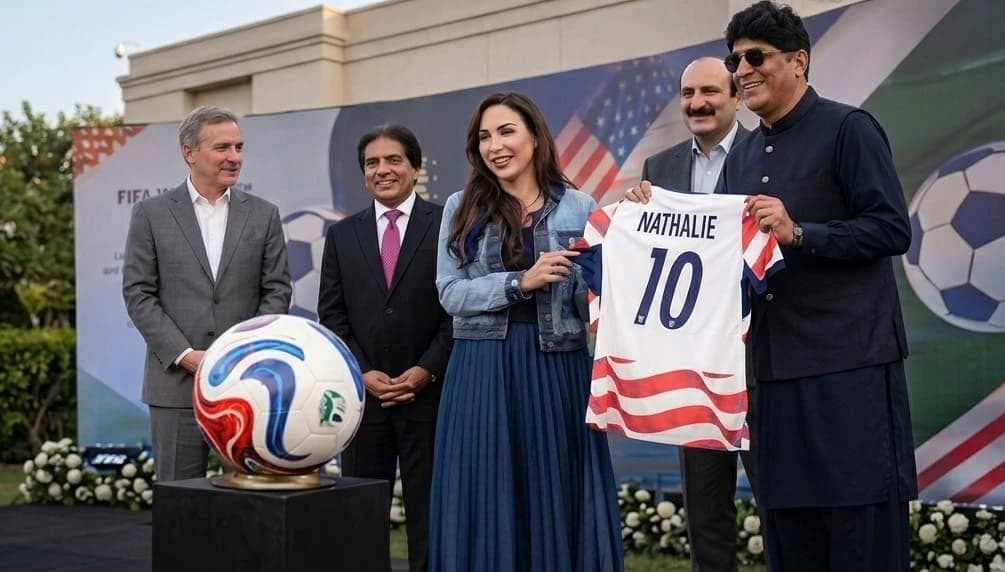
Pakistan has joined the countdown to the FIFA World Cup 2026 with a special launch event at the US E
26 May 2026
Adidas has already released a major lineup of official kits for the 2026 World Cup, emphasizing
26 January 2026
Be the first to share your thoughts
No comments yet. Be the first to comment!
Share your thoughts and join the discussion below.